

 English
 Español
 Deutsch
Precision Gears And Shafts form the core of many mechanical transmission systems. Gears transfer rotational motion and torque, while shafts support the rotating components and transmit power between c...
READ MORE
About

Zhejiang Haoshun Machinery Technology Co., Ltd.
Zhejiang Haoshun Machinery Technology Co., Ltd. is located in Taizhou Bay Industrial Park, Jiaojiang District, Taizhou City, Zhejiang Province. Spanning a total area of more than 56,000 square meters and featuring a substantial building area of 70,000 square meters, the company is a technology-based enterprise specializing in the production of precision gears, shafts, gear sleeves, gear rings, and a variety of other essential components. These products serve a broad spectrum of industries, including automotive, agricultural machinery, construction machinery, and reducer applications.
At the core of the company's strength lies its advanced production and testing equipment, which together form a comprehensive closed-loop production system. Every stage of manufacturing, from blank forging to rough machining, precision machining, and heat treatment, is conducted in-house, ensuring rigorous quality control and high-efficiency output. This vertically integrated approach allows the company to maintain superior product consistency and accelerate delivery times while meeting the evolving demands of clients.
Supporting this robust manufacturing infrastructure is a highly skilled team of 360 employees, including 15 senior and intermediate technical personnel and 25 professionals dedicated to quality management and inspection. Their collective expertise continuously refines the company's product design and manufacturing capabilities, ensuring that every component is produced with exceptional precision and performance reliability.
Haoshun Machinery's product portfolio finds extensive application across multiple sectors. By supplying critical drivetrain components to the automotive, agricultural machinery, construction machinery, and reducer industries, the company has developed the flexibility to offer customized gear products and integrated solutions tailored to the specific needs of diverse clients.
Financially, the company has demonstrated robust growth with annual sales revenue reaching 450 million RMB. This success is underpinned by a lean and agile operational team that has forged enduring partnerships with major OEMs and industry-leading clients, further solidifying the company's reputation as a reliable and strategic partner.
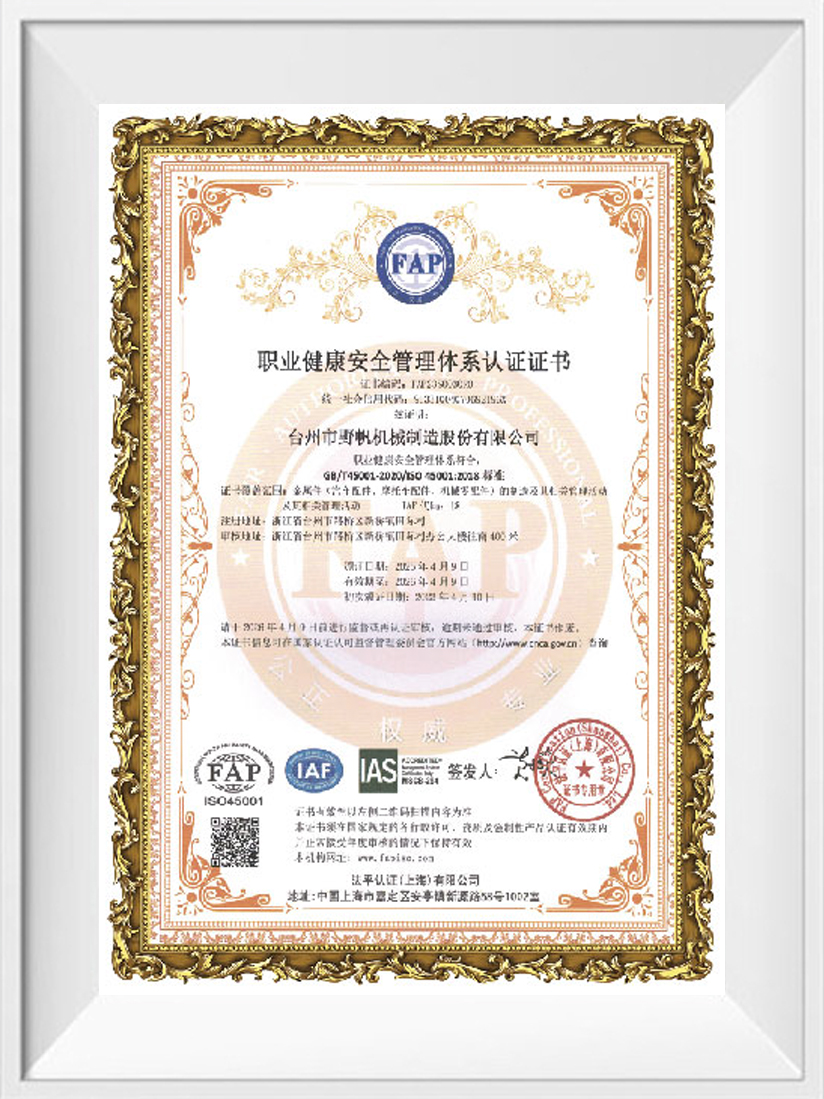
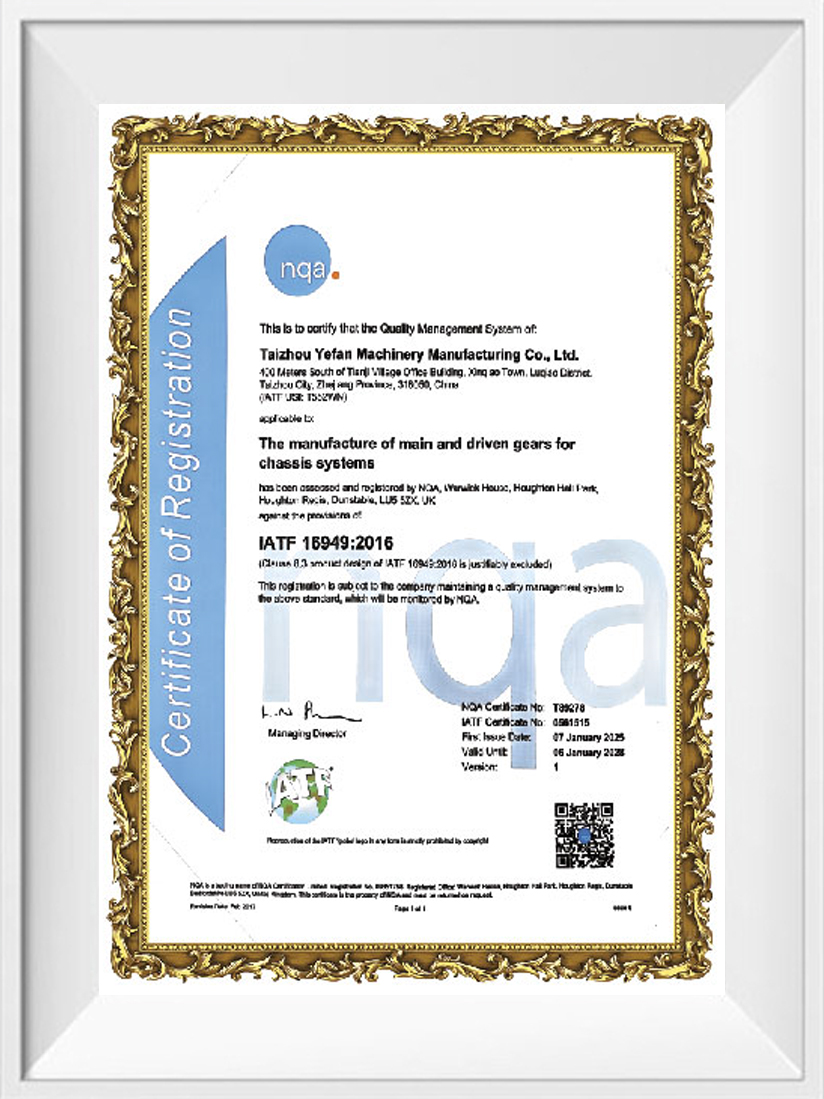
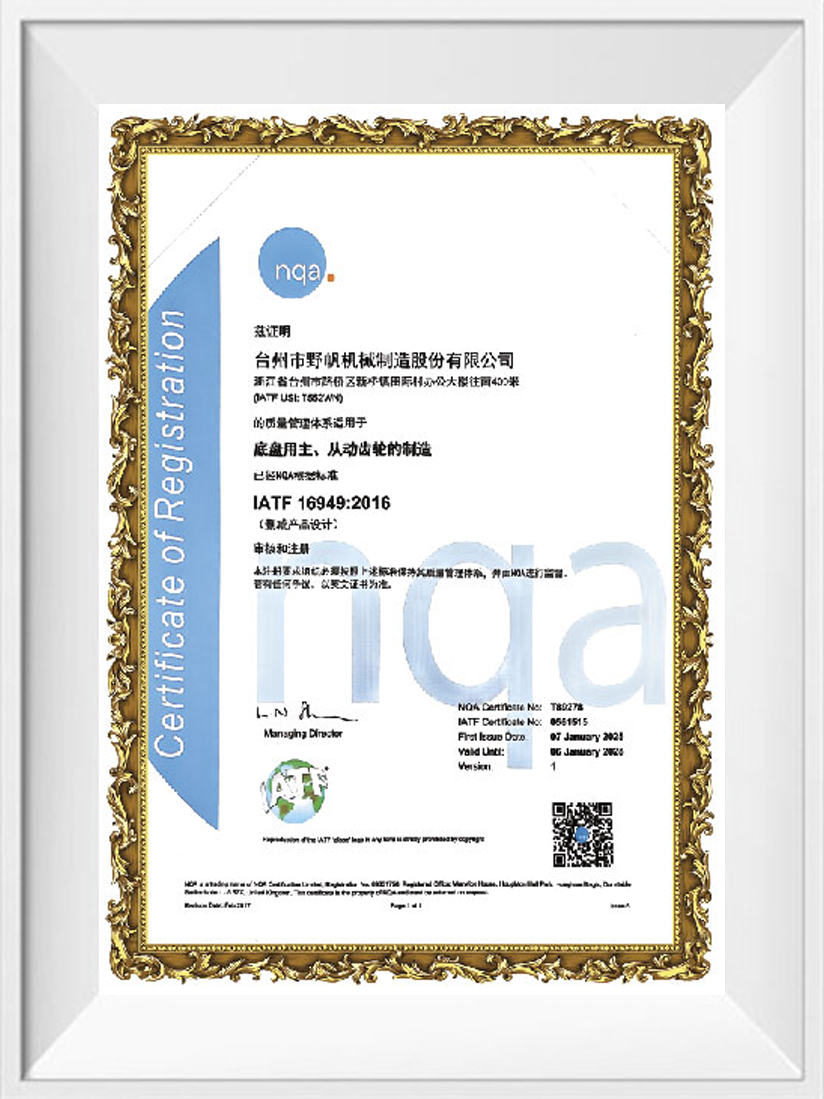
Quality assurance remains a cornerstone of Haoshun Machinery's operations. Since achieving IATF 16949 certification in 2013, the company has embedded a comprehensive quality management system across all levels of its workforce, ensuring that every product leaving the facility conforms to stringent international standards. This commitment to excellence has earned the company multiple accolades, including recognition as a Top 100 Chinese Quality Credit Enterprise, an AAA-level Credit Enterprise, and an Outstanding Enterprise.
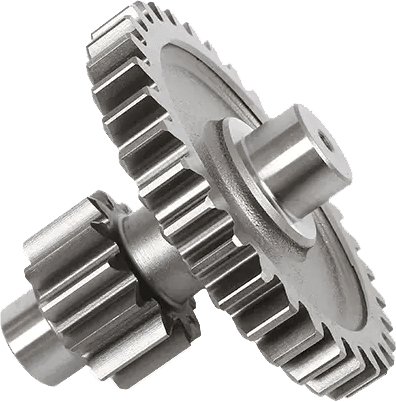
Looking ahead, Zhejiang Haoshun Machinery Technology Co., Ltd. remains steadfast in its guiding philosophy of “Innovation-driven, Quality First.” The company is committed to advancing its research and development capabilities, expanding its presence in both domestic and international markets, and striving to become a globally recognized leader in gear and transmission system solutions. Through continuous innovation and an unwavering focus on customer satisfaction, Haoshun aims to deliver not only high-quality, high-precision Engine Timing & Accessory Gears but also comprehensive technical support and tailored solutions to clients around the world.
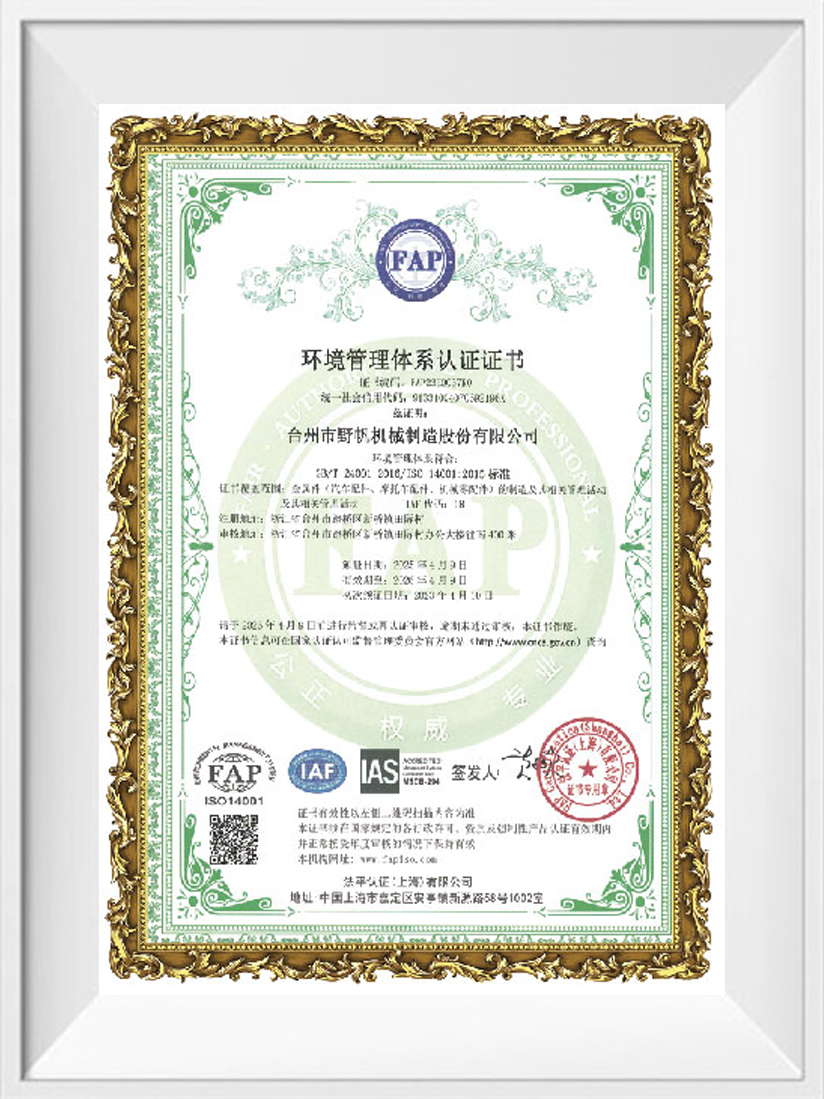
Certificate Of Honor
News
-
-
Inside a transmission system, the final transfer of rotational force depends on several components working together. An Output Gear Shaft is one of the parts that carries this process toward the drive...
READ MORE -
The demand for compact mechanical transmission systems is placing greater attention on how individual gear components contribute to overall equipment layout. A Hollow Worm Gear offers an interesting s...
READ MORE -
Gear conversations typically center on transmitting rotational power from one shaft to another, but a surprising number of mechanical systems need the opposite: turning rotation into straight-line mov...
READ MORE -
An internal combustion engine masks gear whine that would be immediately obvious in an electric vehicle, since there is no engine noise left to cover it once the motor becomes the loudest thing under ...
READ MORE -
A gear that meets every dimension on an inspection report can still get rejected during a supplier qualification audit if the paperwork behind it cannot answer a simple question: which batch of raw ma...
READ MORE -
A gear that meets every dimension on a drawing can still fail an OEM's supplier audit if the paperwork behind it doesn't hold up. Electric drivetrain gear manufacturing for automotive and Tier-supplie...
READ MORE -
Specification decisions around a crawler gear in a truck system rarely come from a single department within a fleet operation, since the requirement usually surfaces from whoever directly experiences ...
READ MORE -
Bore tolerance rarely gets discussed outside engineering drawings, yet it determines whether a hollow output shaft performs reliably in service or introduces vibration and premature wear that shows up...
READ MORE -
Heavy vehicle engineers rarely talk about top speed when they discuss a crawler gear in truck applications, because the entire point of this gear range is the opposite: moving forward at walking pace ...
READ MORE -
Torque transmission looks straightforward from a distance, but the moment a design engineer needs to route a cable, shaft, or pipe through the center of a rotating assembly, a hollow output shaft beco...
READ MORE -
Transmission Gears in industrial systems are rarely evaluated only at the installation stage. In many production lines and mechanical assemblies, what matters more is how gear behavior changes once co...
READ MORE
Industry knowledge
The engine serves as the fundamental source of a vehicle's power, while the precision gear transmission system acts as the core link enabling the synergistic operation of the engine's various subsystems. Timing gears ensure the precise synchronization of valve timing phases, while accessory drive gears maintain the continuous operation of auxiliary systems—such as cooling and lubrication. Furthermore, automotive timing gears are engineered to meet even more stringent requirements regarding precision and noise reduction, specifically tailored to the unique operating conditions of passenger vehicles.
Engine Timing Gears
Core Functional Role of Engine timing gears
Engine timing gears are critical transmission components that connect the crankshaft to the camshaft, ensuring the strict synchronization of the valve train with piston movement. Their primary mission is to accurately transmit the rotational motion of the crankshaft to the camshaft—at a fixed transmission ratio—across the entire engine speed range, thereby guaranteeing that the opening and closing sequence of the intake and exhaust valves aligns goodly with the position of the pistons. Any deviation in timing—even a slight one—can negatively impact engine power output and fuel efficiency; in severe cases, it can collisions between the valves and pistons, resulting in catastrophic mechanical damage.
Key Technical Characteristics of Engine timing gears
- Extremely High Phase Accuracy Requirements: The transmission ratio error of timing gears must be controlled within an extremely narrow tolerance range. The accuracy of the assembly phase is typically ensured through the use of precision-located dowel pinholes and high-precision grinding of the gear tooth surfaces.
- Low-Noise Design: Gear noise generated within the engine compartment directly impacts the vehicle's overall NVH (Noise, Vibration, and Harshness) levels. Consequently, timing gears frequently employ helical or spiral tooth profiles, often combined with precision tooth profile modification techniques, to suppress meshing impact and reduce noise
- Resistance to High Temperatures and Oil Corrosion: Given that they operate while constantly immersed in a high-temperature engine oil environment, the materials used must possess good thermal stability and robust resistance to chemical degradation caused by engine oil
- Long-Life Design Objective: Timing systems are typically designed to last for the entire service life of the engine without requiring replacement; this imposes rigorous design requirements regarding fatigue strength and wear resistance
Transmission Methods and Materials of Engine timing gears
Based on their transmission mechanism, engine timing gears can be broadly categorized into three types: direct gear drive systems, chain drive systems (where the gear functions as a sprocket), and toothed belt drive systems. Among these, the direct gear drive structure is characterized by high structural rigidity and high transmission precision; it is commonly found in diesel engines and certain heavy-duty gasoline engines. In terms of materials, carburized alloy steel predominates; following carburizing and quenching treatments, the gear tooth surfaces achieve a hardness of 58–63 HRC, thereby balancing high surface hardness and wear resistance with core toughness.
Engine Accessory Drive Gears
System Status and Functional Scope of Engine Accessory Drive Gears
Engine accessory drive gears are transmission components specifically designed to tap power from the crankshaft and drive the operation of various auxiliary engine devices. Their scope is extensive, serving as the power source for numerous auxiliary systems, including oil pumps, coolant pumps, fuel injection pumps, air conditioning compressors, and balance shafts.
Typical Sub-types and Functions of Engine Accessory Drive Gears
- Oil Pump Drive Gear: Transmits rotational power from the crankshaft to the oil pump, maintaining continuous oil supply pressure within the engine's lubrication system; it serves as a core drive component essential for preventing dry friction between moving parts.
- Coolant Pump Drive Gear: Drives the coolant pump to force-circulate the coolant, dissipating heat generated by the engine through the radiator to prevent overheating.
- Balance Shaft Drive Gear: Drives the balance shaft in a rotational direction opposite to that of the crankshaft, thereby counteracting the first- or second-order inertial forces generated by the reciprocating motion of the pistons and significantly reducing engine vibration.
- High-Pressure Fuel Pump Drive Gear: In direct-injection engines, this gear specifically drives the high-pressure fuel pump to pressurize fuel to the required injection pressure; it demands high standards regarding both transmission precision and load-bearing capacity.
In some engines, the timing gears and accessory drive gears are integrated within a single gear housing, forming a unified front-end gear train layout that optimizes both structural compactness and ease of maintenance.
Automotive Timing Gears
Background of Specialized Design of Automotive Timing Gears
Automotive timing gears constitute a product category that builds upon standard engine timing gears but undergoes highly specialized optimization tailored specifically to the operating conditions of passenger vehicles. Compared to the timing gears found in construction machinery or marine engines, automotive timing gears are subject to stricter technical specifications regarding lightweight design, noise reduction, and assembly precision, in order to meet the high demands of passenger vehicles concerning ride comfort and overall vehicle NVH (Noise, Vibration, and Harshness) levels.
Core Performance Requirements of Automotive Timing Gears
- Lightweight Design: Passenger car engines are highly sensitive to overall weight control; consequently, automotive timing gears are designed with the thinnest possible cross-sections—while still meeting strength requirements—and for certain vehicle models, engineering plastics or aluminum alloys are utilized to achieve further weight reduction.
- Ultra-Low Noise Standards: Interior noise requirements for passenger vehicles are extremely stringent; thus, the tooth profile precision of automotive timing gears typically must meet ISO Grade 4 or 5 standards, supplemented by precision machining processes such as crowning and tip relief.
- Compatibility with Variable Timing Systems: Modern passenger car engines are widely equipped with Variable Valve Timing (VVT) systems; automotive timing gears must integrate precisely with phase adjustment mechanisms to facilitate the dynamic adjustment of camshaft phasing during engine operation.
- Maintenance-Free Design Objective: Designing for a service life equal to that of the vehicle itself is a critical objective for automotive timing gears; this mandates that no disassembly or inspection be required throughout the entire operational lifecycle, thereby imposing exceptionally high demands on material fatigue resistance and dimensional stability.
Comprehensive Comparison of Three Gear Categories
| Comparison Dimension | Engine Timing Gears | Engine Accessory Drive Gears | Automotive Timing Gears |
| Core Function | Crankshaft-to-Camshaft Phase Synchronization | Drives Auxiliary Systems (Lubrication, Cooling, etc.) | Precise Valve Timing Synchronization for Passenger Vehicles |
| Precision Requirements | ISO Grade 5–6 | ISO Grade 6–8 | ISO Grade 4–5 |
| Noise Control | Moderate Requirements | Relatively Low Requirements | Extremely Strict; NVH Priority |
| Load Characteristics | Moderate Torque; High Cyclic Fatigue | Combined Load from Multiple Devices; Continuous Operation | Primarily Light Load; Sensitive to Vibration |
| Common Materials | Carburized Alloy Steel | Carburized Steel / Cast Iron (for Accessories) | Alloy Steel / Engineering Plastics |
| Maintenance Cycle | Designed for Engine's Full Service Life | Periodic Inspection Based on Maintenance Mileage | Maintenance-Free Design |
| Technical Focus | Phase Accuracy; Thermal Stability | Reliability; Multi-System Drive Compatibility | Lightweight Design; Low Noise; VVT Adaptation |
Key Points for Operation and Maintenance
Although these three categories of gears operate in diverse environments and perform distinct functions, several common principles regarding routine maintenance warrant special attention:
- Prioritize Engine Oil Quality Management: All three gear categories operate within an oil-lubricated environment. Oil quality directly impacts the thickness of the oil film on the gear surfaces and the effectiveness of heat dissipation. Therefore, oil must be changed strictly according to the prescribed intervals, and an oil grade that complies with the engine's specific specifications should always be selected.
- Regular Inspection of Timing Systems: While timing gears are designed to be maintenance-free, the timing phase should be inspected promptly if the vehicle exceeds the recommended mileage limit or if abnormal noises are detected, in order to prevent phase deviation caused by gear surface wear.
- Awareness of Cold-Start Protection: During a cold start at low temperatures, the engine oil has not yet fully circulated, leaving the gear surfaces in their more vulnerable state regarding lubrication. One should avoid driving at high RPMs or under heavy loads immediately after a cold start, allowing sufficient time for the lubrication system to build up adequate oil pressure.
- Troubleshooting Accessory System Noises: Wear on the oil pump or water pump drive gears is often accompanied by abnormal mechanical noises. These issues should be diagnosed and addressed early to prevent the failure of auxiliary systems from triggering secondary damage to other components.
- Strict Matching of Replacement Parts: When replacing any timing or accessory gear, it is mandatory to verify the module (pitch), tooth count, precision grade, and material specifications. It is strictly prohibited to substitute engine-specific gears with generic industrial gears.
information to be updated
Submit feedback
Let’s Build Your Perfect product.
-
William Weber:
Phone: +86-13968651722
E-mail: sales01@hsgearworks.com -
Flora:
Phone: +86-13738533719
E-mail: sales05@hsgearworks.com -
Address:
No.9 East Section, Jianan Avenue, Taizhou Bay New District, Taizhou City, Zhejiang Province, China, 318052
Copyright @ Zhejiang Haoshun Machinery Technology Co., Ltd. All Rights Reserved.
Automotive Timing Gears Exporter
