

 English
 Español
 Deutsch

How Do Transmission Gears Behave Under Load Variation?
Where Engineering Excellence Meets Reliable Transmission
Transmission Gears in industrial systems are rarely evaluated only at the installation stage. In many production lines and mechanical assemblies, what matters more is how gear behavior changes once continuous load is applied and how small variations appear during repeated rotation cycles.
On factory floors, Transmission Gears are usually monitored through sound pattern, vibration feedback, and contact consistency rather than visual inspection alone.
Load Change Does Not Immediately Reflect On Gear Surface
During early operation, gear rotation often appears stable.
Tooth engagement looks consistent.
Rotation noise remains within expected range.
However, after extended load application, slight differences begin to appear in how Transmission Gears interact under continuous stress.
Operators sometimes notice that the same system behaves differently after long-running cycles even when no mechanical adjustment is made.
Gear Meshing Behavior Shifts Under Continuous Rotation
In real operation, gear meshing is not static.
Contact points shift slightly as load increases.
Lubrication distribution changes during heating.
Surface pressure becomes uneven across rotation cycles.
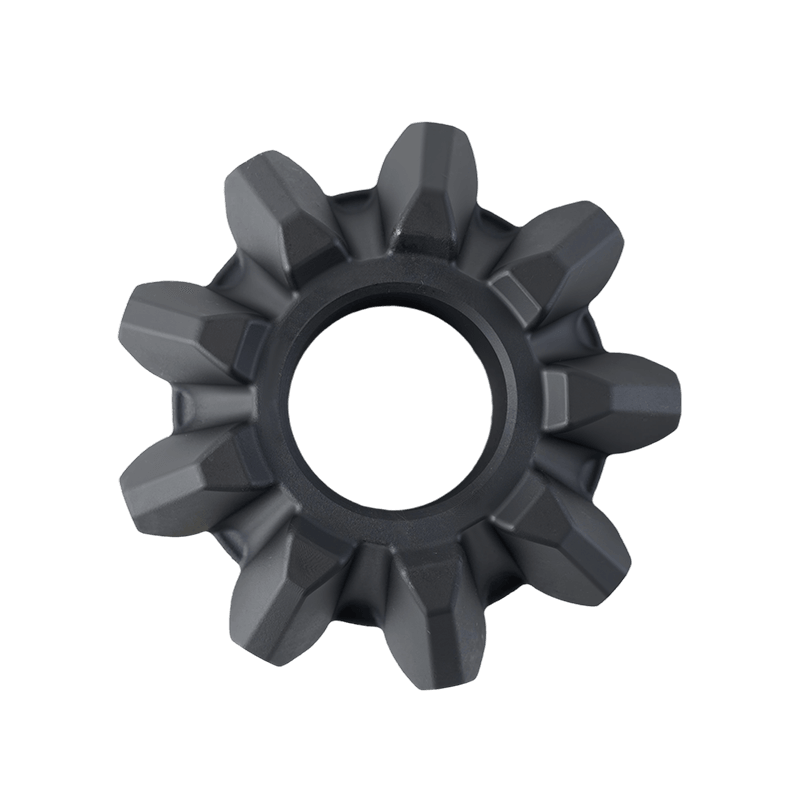
These changes are often recorded during inspection of gear meshing stability in long-running equipment.
Some units show smoother engagement.
Others show slightly harsher contact noise after extended use.
Vibration Patterns Become Noticeable Over Time
At startup, vibration levels are usually minimal.
After continuous operation, vibration may become more noticeable near housing points.
This is not always classified as a fault condition but is recorded as a behavioral variation.
In several mechanical setups, Transmission Gears produce different vibration signatures depending on load continuity and alignment condition.
Tooth Contact Area Does Not Remain Constant
During repeated cycles, contact between gear teeth does not always occur at identical micro positions.
Slight deviation in contact path may develop over time.
This is often influenced by shaft alignment tolerance and thermal expansion.
In field observations, gear meshing stability is often compared across multiple machines rather than single-unit evaluation.
Lubrication Distribution Changes During Operation
Lubricant behavior is not fully static.
At lower speed, oil distribution is more uniform.
At higher speed, distribution becomes dynamic and uneven.
Some contact points receive more lubrication.
Others receive slightly less during transient load changes.
These variations influence how Transmission Gears behave in continuous production environments.
Noise Pattern Variation Appears During Long Cycles
Noise level is not constant during operation.
Some systems maintain stable acoustic output.
Others develop slightly irregular sound patterns after prolonged running.
These changes are usually subtle and only noticeable during comparative listening across multiple units of Transmission Gears.
Alignment Drift Occurs Gradually
Mechanical alignment does not change abruptly.
It shifts gradually under repeated load cycles.
Shaft position may adjust slightly due to thermal expansion.
Mounting structure may absorb vibration differently over time.
These small changes affect long-term gear meshing stability without immediate visible failure.
Contact Stress Distribution Is Not Uniform
Load is not evenly distributed across all gear teeth at all times.
Some teeth carry slightly higher stress during rotation peaks.
Others experience lighter engagement depending on rotation phase.
This uneven distribution is often observed during inspection of Transmission Gears under variable load conditions.
Production Line Observations Are Often Fragmented
Operators usually do not record full system behavior continuously.
Instead, they note short observations:
slight increase in noise after shift change
minor vibration difference between machines
uneven smoothness during load variation
These fragmented notes are later used to evaluate Transmission Gears performance consistency.
Mechanical Behavior Is Observed Across Time Rather Than Moments
Single-point inspection rarely reflects actual gear behavior.
Changes appear only after repeated operation cycles.
Early-stage performance may look stable.
Later stage behavior may show variation under identical conditions.
This is why evaluation of Transmission Gears is often based on long observation windows rather than instant measurement results.
-
William Weber:
Phone: +86-13968651722
E-mail: sales01@hsgearworks.com -
Address:
No.9 East Section, Jianan Avenue, Taizhou Bay New District, Taizhou City, Zhejiang Province, China, 318052
Copyright @ Zhejiang Haoshun Machinery Technology Co., Ltd. All Rights Reserved.
Precision Gears Manufacturer
