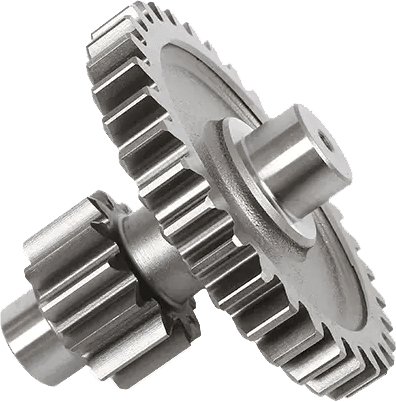
In heavy industrial machinery systems, gear assemblies play a pivotal role in power transmission and torque distribution. Given that their operating environments typically involve high loads and prolonged operation, the structural design of these gear assemblies places a strong emphasis on stability and durability. A typical gear assembly generally comprises a driving gear, a driven gear, a shaft system, and supporting bearings; power transmission is achieved through the precise interlocking and coordination of these individual components.
Within the overall structural framework, the meshing precision of the gears directly influences the smoothness of transmission, while the rigidity of the shaft system determines the system's responsiveness to fluctuations in load. Consequently, during the engineering design phase, a systematic analysis of the load path is routinely conducted to ensure that the applied loads are distributed equitably across all components.
Load Distribution and Operational Characteristics Control
During operation, heavy-duty gear assemblies are subjected to continuously varying torque loads; uneven load distribution can accelerated localized wear. To mitigate this issue, design strategies typically involve optimizing the gear tooth contact ratio and adjusting gear tooth profile parameters to enhance meshing stability.
In multi-stage transmission systems, loads are transmitted sequentially from one gear stage to the next; therefore, ensuring a proper strength match across all gear stages is of paramount importance. If the load-bearing capacity of any single transmission stage proves insufficient, it may compromise the overall operational integrity of the entire system.
Furthermore, lubrication conditions exert a significant influence on load distribution. A stable oil film serves to small direct metal-to-metal contact, thereby reducing the coefficient of friction and enhancing the smoothness of operation.
Key Control Points in Manufacturing and Assembly Processes
The manufacturing of gear assemblies typically involves a multi-stage processing sequence, encompassing operations such as gear profiling, heat treatment, and precision finishing. Throughout these processing stages, errors in gear pitch and deviations in tooth profile must be maintained within permissible tolerances to ensure the accuracy of subsequent assembly.
The assembly phase focuses primarily on critical parameters such as gear center distance, shaft axis parallelism, and meshing clearance. Significant assembly deviations can result in increased operational noise levels or localized stress concentrations.
To enhance overall consistency and uniformity, certain production workflows employ a "group-matching" technique, wherein gear pairs are selectively paired to ensure a more balanced and uniform contact state during meshing.
Comparison of Common Gear Assembly Structural Types
| Structural Type | Composition Method | Key Features | Application Scenarios |
| Single-Stage Spur Gear Structure | A single pair of meshing gears | Simple structure; direct transmission | Basic transmission systems |
| Multi-Stage Reduction Structure | Multiple sets of gears in series | Achieves high transmission ratios | Heavy-duty reduction equipment |
| Planetary Gear Structure | Combination of sun gear and planetary gears | Load is distributed relatively evenly | Compact power systems |
| Crossed-Axis Structure | Combination of bevel gears or worm gears | Changes transmission direction | Space-constrained devices |
When designing gear systems, the selection of a specific structural form requires careful consideration of both spatial layout and load conditions to ensure good system compatibility and performance.
Wear and Maintenance Management During Operation
Under conditions of long-term operation, gear assemblies inevitably experience wear; this typically manifests as tooth surface pitting, scuffing (adhesive wear), or fatigue cracks. The severity of wear is usually closely correlated with load intensity, lubrication quality, and operating duration.
During maintenance, common inspection methods include visual examination of tooth surface conditions, clearance measurements, and vibration monitoring. Through regular maintenance, anomalies can be detected in a timely manner, allowing for the implementation of appropriate corrective measures.
The condition of the lubrication system has a direct impact on gear lifespan. If the quality of the lubricating oil degrades or its circulation becomes impeded, the gear surfaces become susceptible to dry friction, thereby accelerating wear and deterioration.
Adaptability in Industrial Applications
Heavy-duty gear assemblies are widely utilized in fields such as mining equipment, metallurgical machinery, transportation systems, and large-scale power generation units. In these application scenarios, equipment typically requires continuous operation over extended periods; consequently, this places stringent demands on the reliability of the gear systems.
In diverse operating environments, the structural configuration of gear assemblies is customized to suit specific spatial constraints and load characteristics. For instance, in equipment with limited spatial envelopes, compact structural designs are preferred; conversely, in scenarios requiring high torque output, multi-stage transmission configurations are adopted to effectively distribute the load.
Overall, the design and application of gear assemblies in heavy industrial machinery exemplify the comprehensive requirements—specifically regarding structural harmony and operational stability—inherent in mechanical transmission systems.