

 English
 Español
 Deutsch

Hollow Worm Gear Design Brings Compact Transmission Benefits
Where Engineering Excellence Meets Reliable Transmission
The demand for compact mechanical transmission systems is placing greater attention on how individual gear components contribute to overall equipment layout. A Hollow Worm Gear offers an interesting structural approach because the hollow configuration can reduce unnecessary material around the center while creating space for shaft arrangements or other mechanical elements. In worm transmission systems, where right-angle power transfer and substantial speed reduction are already important characteristics, the geometry of the gear itself can influence both integration and manufacturing requirements.
Geometry Becomes Part of Transmission Design
Worm gearing is commonly selected when a machine requires right-angle power transmission, significant speed reduction, and controlled motion within a relatively compact arrangement. The worm and worm wheel operate through sliding contact, allowing the system to achieve reduction within a single gear stage in many applications. This combination has kept worm gearing relevant in industrial motion-control and power-transmission equipment.
The introduction of a hollow center changes how the worm wheel can be incorporated into the surrounding assembly. Instead of treating the gear as an isolated rotating element, engineers can consider the bore, shaft interface, bearing arrangement, and housing together. For a Hollow Worm Gear, this makes the central geometry an important part of the mechanical design rather than simply a weight-reduction feature.
Direct Shaft Integration Influences Machine Layout
Hollow-shaft transmission arrangements are often associated with direct mounting because the driven shaft can pass through the central bore instead of requiring the same type of coupling arrangement used with a conventional solid output shaft. This can reduce the number of separate connection components and help shorten the overall drive assembly.
For equipment designers, the significance of a Hollow Worm Gear therefore extends beyond its appearance. The bore diameter, keyway or other shaft interface, bearing support, and available installation space must work together. A change to one dimension can affect the surrounding housing and shaft structure, so hollow gear designs are generally developed as part of the complete transmission rather than independently.
This approach can be useful in machinery where installation space is restricted. Direct mounting can also reduce alignment requirements associated with additional coupling components, although the final arrangement still depends on the driven equipment and shaft design.
Manufacturing Accuracy Remains Central
Changing a worm wheel from a conventional solid structure to a hollow configuration does not remove the fundamental requirements of gear manufacturing. Tooth geometry, concentricity, bore accuracy, surface condition, and the relationship between the tooth system and shaft interface all contribute to the final operating behavior.
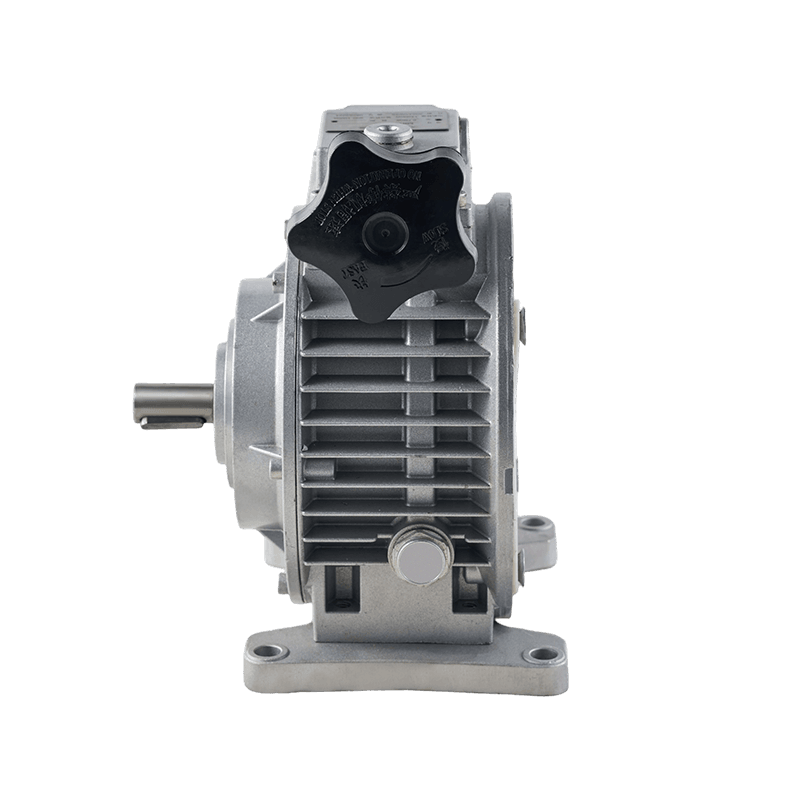
This becomes particularly relevant when a Hollow Worm Gear is produced for a customized transmission. The manufacturer may need to coordinate blank preparation, machining, tooth formation, heat treatment, and finishing according to the final drawing. Haoshun Machinery describes an in-house production route covering blank forging, rough machining, precision machining, and heat treatment for its broader precision-gear portfolio.
For B2B gear development, this process perspective matters because the central bore and external tooth geometry cannot be treated as unrelated machining operations. Their positional relationship influences how the finished gear fits into the transmission assembly.
Material and Heat Treatment Follow the Duty Cycle
Gear material selection is closely connected with the loads, speed, contact conditions, and expected operating cycle of the transmission. Worm drives involve significant sliding interaction between the worm and wheel, making tooth-surface behavior an important consideration in material and lubrication decisions. Improvements in lubrication, gear-set design, and machining accuracy have continued to support the use of worm gearing in motion-control applications.
For a Hollow Worm Gear, material distribution also becomes part of the structural discussion. Removing material from the center changes the cross-sectional geometry, so the remaining section must provide the required mechanical support around the bore and tooth region. This is why hollow construction should be developed together with load requirements rather than treated simply as a way to reduce mass.
Custom Gear Development Is Moving Toward Application Matching
Industrial gear manufacturers increasingly work across automotive, agricultural machinery, construction equipment, reducers, and other transmission applications. Haoshun Machinery's current product structure includes vehicle gears, agricultural machinery gears, construction machinery gears, pump and compressor gears, marine transmission gears, and other industrial gear categories.
This broad application environment creates demand for gear components that can be adapted to different shaft dimensions, transmission layouts, load conditions, and assembly methods. A Hollow Worm Gear can therefore be considered within a wider trend toward application-specific transmission components, where geometry is developed around the machine rather than selected solely from a standard catalog.
For OEM engineering teams, useful design discussions may include the required bore configuration, tooth geometry, gear ratio, mounting arrangement, material, heat-treatment route, and dimensional tolerances. These factors provide a more practical basis for developing a gear that fits the complete transmission.
Hollow Geometry Reflects a Broader Design Direction
The development of hollow gear structures is part of a wider movement toward more integrated mechanical systems. Hollow-shaft arrangements can support compact layouts and direct mounting, while worm gearing continues to provide useful characteristics for applications requiring reduction and right-angle transmission.
A Hollow Worm Gear consequently represents more than a modified gear shape. Its value comes from how the hollow structure interacts with the shaft, bearings, housing, tooth geometry, and installation space. As industrial machinery becomes increasingly compact and application-specific, gear development is likely to place greater emphasis on this relationship between component geometry and the architecture of the complete transmission system.
-
William Weber:
Phone: +86-13968651722
E-mail: sales01@hsgearworks.com -
Address:
No.9 East Section, Jianan Avenue, Taizhou Bay New District, Taizhou City, Zhejiang Province, China, 318052
Copyright @ Zhejiang Haoshun Machinery Technology Co., Ltd. All Rights Reserved.
Precision Gears Manufacturer
