

 English
 Español
 Deutsch


Slew Drive Gears Cycle Count Follows The Tooth Ratio
Where Engineering Excellence Meets Reliable Transmission
Slew Drive Gears do not wear evenly across the drive: the small pinion carries many more load cycles than the large ring it turns, and that ratio shapes how both parts are made. A slewing system on an excavator, crane, or rotating platform pairs a motor or hydraulic unit, a reduction mechanism, a pinion, and a slewing bearing with an external gear ring. Every load that turns the upper structure passes through the pinion, and the pinion meets the ring many times for each turn of the platform.
One Platform Turn Means Several Pinion Turns
The tooth ratio sets the cycle count. A 120-tooth ring turned by a 12-tooth pinion needs 10 pinion revolutions for each platform turn. Each pinion tooth engages the ring 10 times in that turn, while each ring tooth engages once. The pinion in Slew Drive Gears therefore sees ten times the load cycles of any single tooth on the ring, and the gap grows as the ring gets larger relative to the pinion.
This is why Swing Drive Gears and pinions are treated as the high-cycle part of the system. The ring is a large, slow component built by the bearing maker, and the pinion is the part that works hardest and is designed with the margin.
Swing Work Is Mostly Partial Turns And Reversals
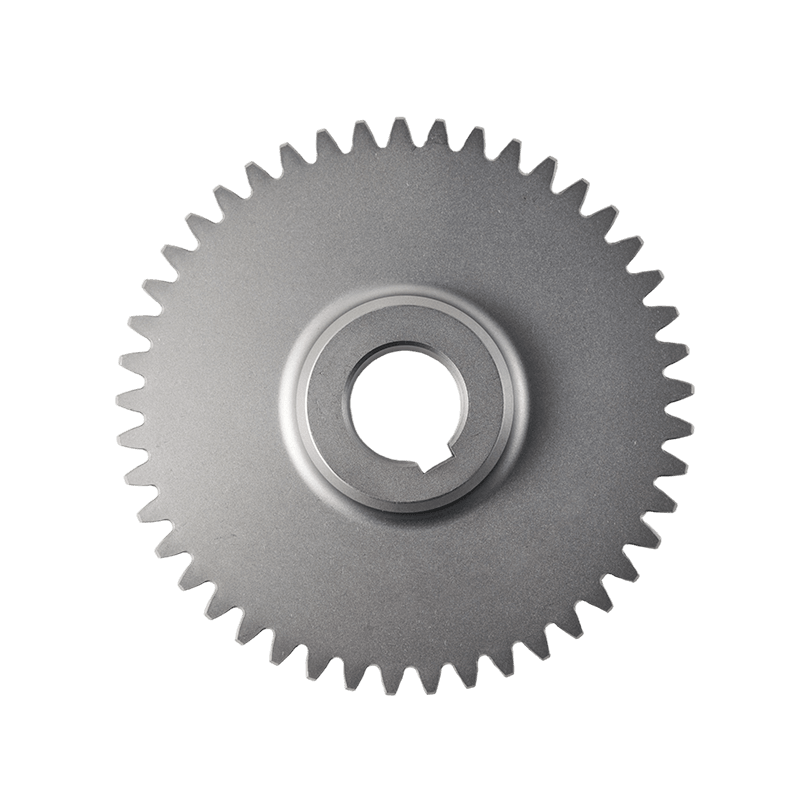
Excavators and cranes seldom turn complete circles, so their Slewing Ring Drive Gears swing through partial arcs, stop, and swing back, and the same sector of the ring and the same pinion teeth meet repeatedly. Reversal loads both flanks of the pinion tooth in turn, and alternating impact on both sides is a fatigue condition that one-direction drives do not face.
Large diameter adds another factor for Slew Drive Gears. As the platform rotates, the contact area between pinion and ring varies with the angle, so tooth surface finish and machining precision have to hold across the whole ring, not just at one position.
Starting And Stopping Add Inertia Loads
The upper structure of a machine has substantial mass, and every start and stop sends inertial shock through the mesh of Slew Drive Gears. A slewing system under low-speed, heavy load also concentrates contact stress on the tooth surface. The drive carries axial force, radial force, and overturning moment together, and the gear strength design has to include a sufficient safety margin for those combined loads.
Some Slewing Ring Drive Gears use helical teeth to improve contact continuity and reduce vibration and noise during swing. A reduction stage ahead of the pinion, planetary for compact layout or worm for self-locking position holding, converts the high input speed into the high torque that the platform needs.
A Tough Core And A Hard Surface On The Pinion
The pinion in Slew Drive Gears needs two properties that pull in opposite directions: a hard surface to resist wear and pitting, and a tough core to absorb shock without cracking at the root. Medium-carbon alloy steel and high-strength structural steel are the usual materials, followed by quenching and tempering, surface hardening, or induction hardening. Surface hardening handles wear, and the toughness retained in the core handles impact.
Haoshun starts with qualified steel and uses forged blanks when the application needs higher strength. Heat treatment is controlled to reach hardness and stability targets, and precision machining then keeps bearing seats, splines, and mounting faces consistent from part to part. Large-diameter gear rings can also be ground to improve meshing accuracy.
Lubrication And Inspection Follow The Pinion
Slew Drive Gears work at low speed under heavy load for long periods, and that combination makes the lubricant film the main protection for the mesh. Grease or oil forms a film between the tooth surfaces, and periodic manual greasing or a centralized lubrication system keeps the film in place.
Wear shows up in recognizable forms: tooth surface wear, pitting, root cracks, and growing mesh clearance. Load fluctuation, thin lubrication, and assembly deviation drive all four, and frequent reversals add alternating impact on top. Because the pinion in Slew Drive Gears carries the higher cycle count, it reaches these conditions before the ring does, so a look at the pinion teeth and the grease condition tells the operator the state of the whole drive early.
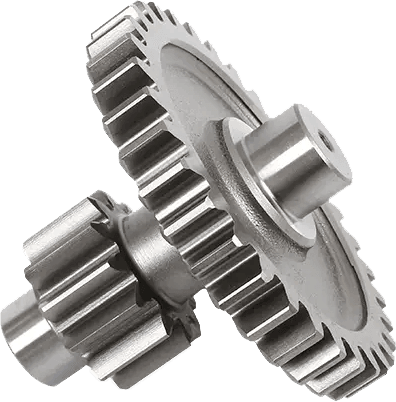
Haoshun produces Swing Drive Gears, reduction gears and gear shafts for these drives. A replacement pinion has to carry the same tooth form, the same hardness profile, and the same bearing seat and spline dimensions as the original, so that it meshes with the existing ring as before. A pinion made that way returns a set of Slew Drive Gears to its original mesh, and its own cycle count starts again from the swing.
-
William Weber:
Phone: +86-13968651722
E-mail: sales01@hsgearworks.com -
Address:
No.9 East Section, Jianan Avenue, Taizhou Bay New District, Taizhou City, Zhejiang Province, China, 318052
Copyright @ Zhejiang Haoshun Machinery Technology Co., Ltd. All Rights Reserved.
Precision Gears Manufacturer
