

 English
 Español
 Deutsch


Heavy-duty Gear Manufacturing Fights Distortion Before It Fights Wear
Where Engineering Excellence Meets Reliable Transmission
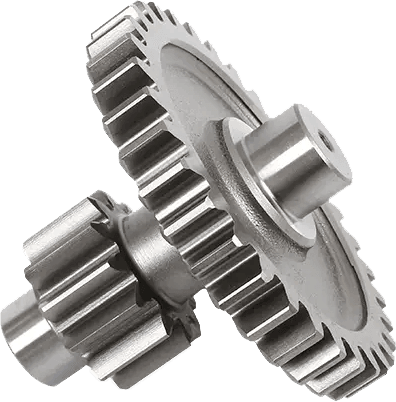
Heavy-duty Gear Manufacturing changes character as parts grow. A small gear can be heated, quenched, and ground with few surprises, while a gear ring or a large drive gear moves, twists, and cools unevenly during every thermal step. Zhejiang Haoshun Machinery Technology Co., Ltd. in Taizhou, Zhejiang, makes drive gears for construction and port-handling machinery, tractor transmission and PTO gears, gear shafts, and gear rings, and the discipline of controlling size and shape runs through all of them.
Mass Slows the Quench
When a hot steel part is quenched, the surface cools quickly, and the core follows later. In a thick section, the gap between the two is large, and the core may never cool fast enough to harden. Steel makers handle this with alloying, and the property that describes it is hardenability, the depth to which a steel hardens under a given quench. Chromium, nickel, and molybdenum raise hardenability, and a steel with too little of it leaves a soft core under a hard skin. Large carburized gears are commonly made from steels such as 17CrNiMo6 or 18CrNiMo7-6, and heavy quenched and tempered shafts from 42CrMo4. Heavy-duty Gear Manufacturing starts with this match between section size and steel, and the material grade for each part at Zhejiang Haoshun Machinery Technology Co., Ltd. can be confirmed with the factory before ordering.
Distortion Moves the Tooth
Heating and quenching never leave a part exactly as it entered. A large ring tends to go out of round, a long shaft bends, and tooth profiles shift by a few hundredths of a millimeter. The distortion is predictable in direction, but not in amount, so heavy parts are cut with extra stock on the flanks and finished after heat treatment. Fixtures that hold a ring round during quenching, and press quenching for large parts, reduce the movement. A gear that leaves the furnace within tolerance saves hours of grinding, and in heavy-duty gear manufacturing, that saving decides both cost and time.
Stress Is Set Up Long Before the Furnace

Distortion begins earlier than the quench. A forged blank carries residual stress, and rough machining releases some of it unevenly. A part cut straight from the forging can warp during machining and warp again in heat treatment. A normalizing or tempering step between rough machining and the final thermal cycle relaxes those stresses. The factory forges blanks, rough machines, precision machines, and heat treats in-house, which keeps the whole chain under one roof, and the order of these steps is where Heavy-duty Gear Manufacturing gains stability. The exact heat treatment route for each gear can be confirmed with the factory before ordering.
Gear Shafts, Flanges, and PTO Gears Differ
Different parts use different material strategies. Gear shafts are commonly made from medium-carbon alloy steel or carburizing steel, companion flanges from forged alloy steel with phosphating, zinc plating, or anti-rust paint, and PTO gears from carburized and hardened steel. A Heavy-duty Gear Manufacturing program covers these parts in one family, so the process knowledge of one part carries to the next, with hardenability checked for each section size. The size range, module, and tooth count for each part are not stated here and can be confirmed with the factory before ordering.
Shock Loads in Construction and Port Work
Construction machinery and port handling gear are loaded in bursts. An excavator track drive hits an obstacle, a container crane starts a heavy lift, and the load passes through the gear train as a shock. Heavy parts in Heavy-duty Gear Manufacturing carry more energy at the same speed, so the margin between normal and peak load has to be wider. The drive gears made by Zhejiang Haoshun Machinery Technology Co., Ltd. for construction and port-handling work serve this duty, and Heavy-duty Gear Manufacturing for them has to allow for the peaks as well as the average.
Inspecting a Large Gear
A small gear fits on a bench inspection machine, and a large one needs a gear measuring center with a big table or a portable system. Inspectors check pitch, profile, helix, and runout, the same quantities as for any gear, but on a larger part, the measurements take longer and stability of the workpiece matters. Inspection is a larger task in Heavy-duty Gear Manufacturing than for small gears. The measuring equipment used at the factory is not stated here and can be confirmed with the factory before ordering.
Handling Counts in Heavy Work
A heavy gear needs a crane and proper slings to move, and a drop or a knock against a tooth can undo hours of work. Handling plans, lifting points, and clean storage are part of good Heavy-duty Gear Manufacturing, as the part passes between forging, machining, heat treatment, and inspection.
-
William Weber:
Phone: +86-13968651722
E-mail: sales01@hsgearworks.com -
Address:
No.9 East Section, Jianan Avenue, Taizhou Bay New District, Taizhou City, Zhejiang Province, China, 318052
Copyright @ Zhejiang Haoshun Machinery Technology Co., Ltd. All Rights Reserved.
Precision Gears Manufacturer
