

 English
 Español
 Deutsch

Electric Drivetrain Gear Manufacturing Tracks Every Batch
Where Engineering Excellence Meets Reliable Transmission
A gear that meets every dimension on a drawing can still fail an OEM's supplier audit if the paperwork behind it doesn't hold up. Electric drivetrain gear manufacturing for automotive and Tier-supplier programs runs on two parallel tracks that matter equally: the physical process that shapes and hardens the part, and the documentation trail that proves each batch was produced and inspected the way the drawing specified. Buyers who evaluate a supplier purely on sample part quality, without asking how the second track works, sometimes discover the documentation gap only once an OEM's own audit team flags it during a supplier qualification review of their electric drivetrain gear manufacturing partner.
Why Blank Selection Happens Before Anything Else
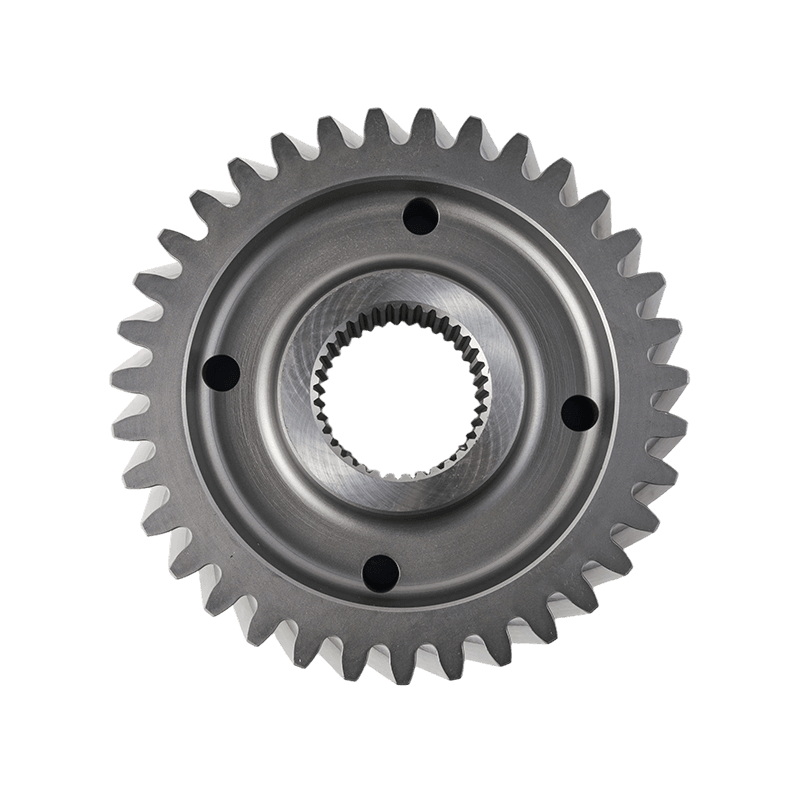
Electric drivetrain gear manufacturing typically starts from either a forged blank or bar stock, and this early decision shapes everything downstream rather than being a minor sourcing detail. Forged blanks align the material's internal grain flow with the part's shape, which generally improves fatigue resistance in high-load applications like e-axle reduction gears that see constant torque reversal. Bar stock machining skips the forging step entirely, trading some fatigue performance for shorter times and lower tooling investment on lower-volume or less demanding programs. Buyers should confirm which blank method a supplier defaults to for a given part family, since the choice affects both cost and long-term durability in ways a finished part's dimensions alone won't reveal.
How Heat Treatment Control Affects High-Speed Gear Performance
Controlled heat treatment in electric drivetrain gear manufacturing has to balance surface hardness against core toughness, a balance that matters more for EV gears than for internal combustion equivalents because electric motors deliver instant torque across a wider speed range than a combustion engine typically does. Heat treatment distortion is a genuine production risk at this stage, since even minor dimensional shift during hardening can throw off the tight tooth accuracy EV reduction gears require at high rotational speeds. Buyers should ask suppliers how they control and measure distortion after heat treatment, rather than assuming a supplier's general heat treatment capability automatically extends to the tighter tolerances EV gear programs demand.
Machining Interfaces and Tooth Finishing Choices
Electric drivetrain gear manufacturing places particular emphasis on interface accuracy during machining, since bore fit, shaft interfaces, and mounting faces all need to hold tolerance well enough that the finished gear assembles correctly into an e-axle or reducer housing without introducing misalignment. Tooth finishing method gets selected based on the noise and service-life targets a specific program requires, since a gear destined for a passenger vehicle cabin has tighter noise tolerance than one built for construction equipment where ambient noise from the equipment itself dominates. Buyers should specify noise and life targets clearly at the quoting stage rather than leaving tooth finishing method entirely up to the supplier's default process.
Comparing Blank Sourcing Approaches
|
Factor |
Forged Blank |
Bar Stock |
|
Fatigue resistance |
Generally higher, grain flow follows part shape |
Lower, grain structure doesn't follow geometry |
|
Lead time |
Longer, requires forging step |
Shorter, machined directly from stock |
|
Tooling investment |
Higher upfront cost |
Lower upfront cost |
|
Typical fit |
High-load, high-volume programs |
Lower-volume or less demanding applications |
Inspection, Traceability, and Documentation for OEM Programs
Inspection in electric drivetrain gear manufacturing covers critical dimensions along with runout and concentricity where the application requires it, but for OEM and Tier-supplier programs, the documentation trail matters just as much as the measurement itself. Batch traceability lets a buyer trace a specific finished part back through machining, heat treatment, and raw material sourcing if a quality issue surfaces after delivery, which is a requirement rather than a nice-to-have across the majority of automotive supply chains. Buyers should confirm a supplier maintains this traceability by default rather than only on request, since retrofitting traceability onto an already-running production line is considerably harder than building it in from the start.
Certification Documents Buyers Should Expect
EN 10204 3.1 material certificates, inspection reports, and warranty letters form the standard documentation package OEMs and Tier suppliers expect to accompany drawing approval, sample submission, and volume production stages in electric drivetrain gear manufacturing. Rust prevention treatment and export packaging deserve equal attention for buyers sourcing electric drivetrain gear manufacturing internationally, since a gear that passes every dimensional check can still arrive corroded after overseas transit if packaging wasn't specified for the actual shipping duration and climate conditions involved. Buyers should request packaging specifications tailored to their specific shipping route rather than accepting a supplier's standard domestic packaging for an international order, since a route crossing humid coastal regions or extended transit times warrants a different rust-prevention approach than a short, dry-climate domestic shipment.
-
William Weber:
Phone: +86-13968651722
E-mail: sales01@hsgearworks.com -
Address:
No.9 East Section, Jianan Avenue, Taizhou Bay New District, Taizhou City, Zhejiang Province, China, 318052
Copyright @ Zhejiang Haoshun Machinery Technology Co., Ltd. All Rights Reserved.
Precision Gears Manufacturer
